Articles
Warehouse identification and floor marking system
Overview:
Shadow boards are one of the simplest, most cost-effective tools a facility can use to keep tools organized, accounted for and safe from misuse. For any site running a 5S program, from manufacturing plants to distribution centers, 5S shadow boards turn tool storage into a visual system that shows, at a glance, whether every item is where it should be. This guide covers what shadow boards are, why they matter for safety and efficiency, how to set one up, which materials suit different environments, and how they fit into a wider 5S rollout.
These facilities are in the business of handling and storage, where space optimization, and minimizing movement affect profit margins considerably.
Specialists and consultants are used to analyze historical inventory volumes and movements which provide them with the insight to help design and maximize facility potential. Their understanding of the industry, product knowledge and intrinsic focus, results in optimal layouts which are highly valued. Bringing specialized handling and storage systems, rack configurations, MHE routing flows, and floor storage, changes the building from a box to living environment.
These are the foundations on which most buildings run throughout their lifespan.
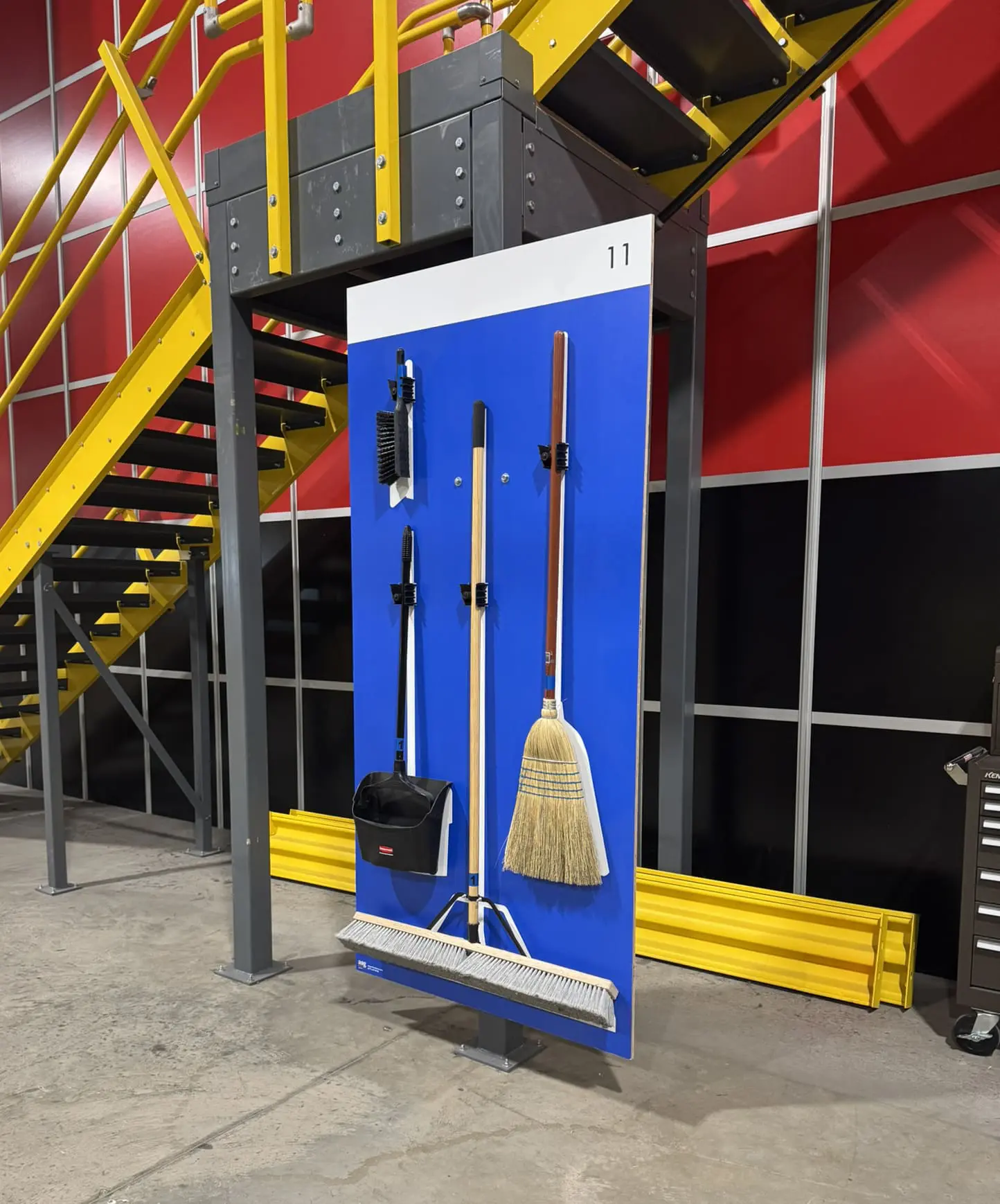
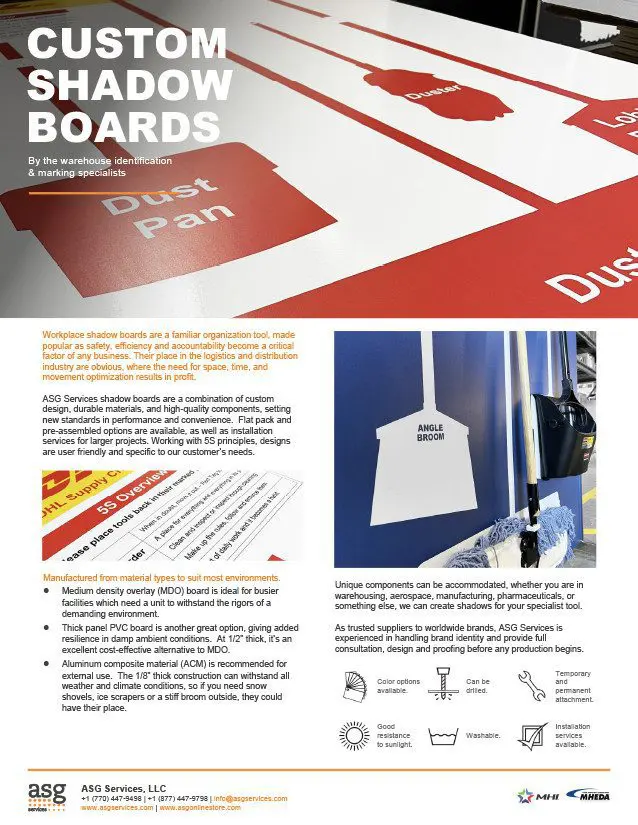
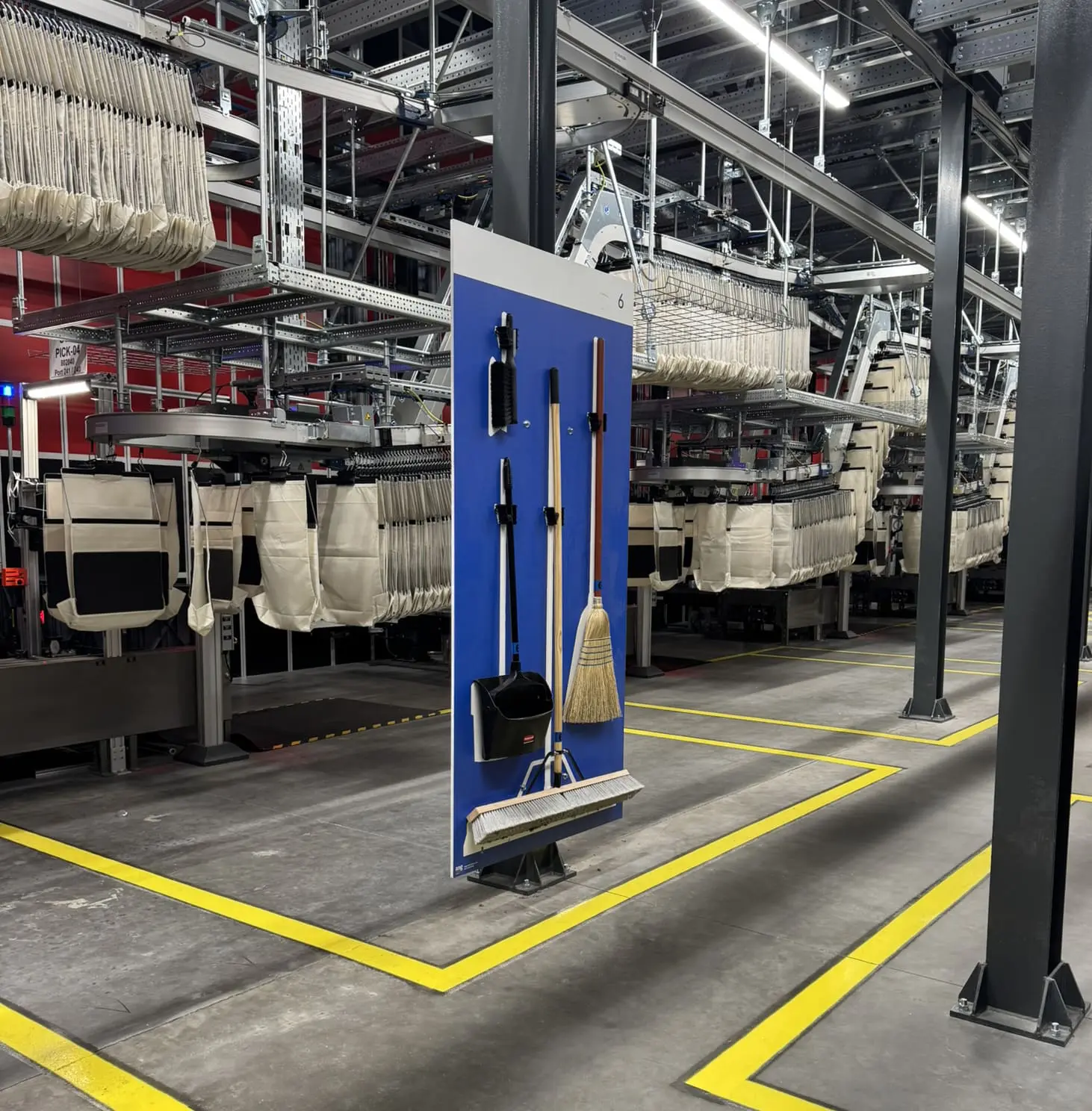
A shadow board is a storage panel, usually mounted to a wall, workbench or rack end, that holds tools and equipment against an outlined silhouette (the “shadow”) of each item. When a tool is removed, its outline remains visible, so anyone walking past can see instantly whether it has been returned. This simple visual cue is what makes shadow board organization so effective: there is no need to check an inventory list or search a toolbox, because a missing item is obvious from a distance.
Shadow boards are used wherever tools, cleaning implements or safety equipment need a fixed, visible home: assembly lines, maintenance bays, cleaning stations, warehouses and loading docks all commonly rely on them. ASG Services’ custom shadow boards are designed and built to match the specific tools, branding and space constraints of each facility, rather than a generic off-the-shelf layout.
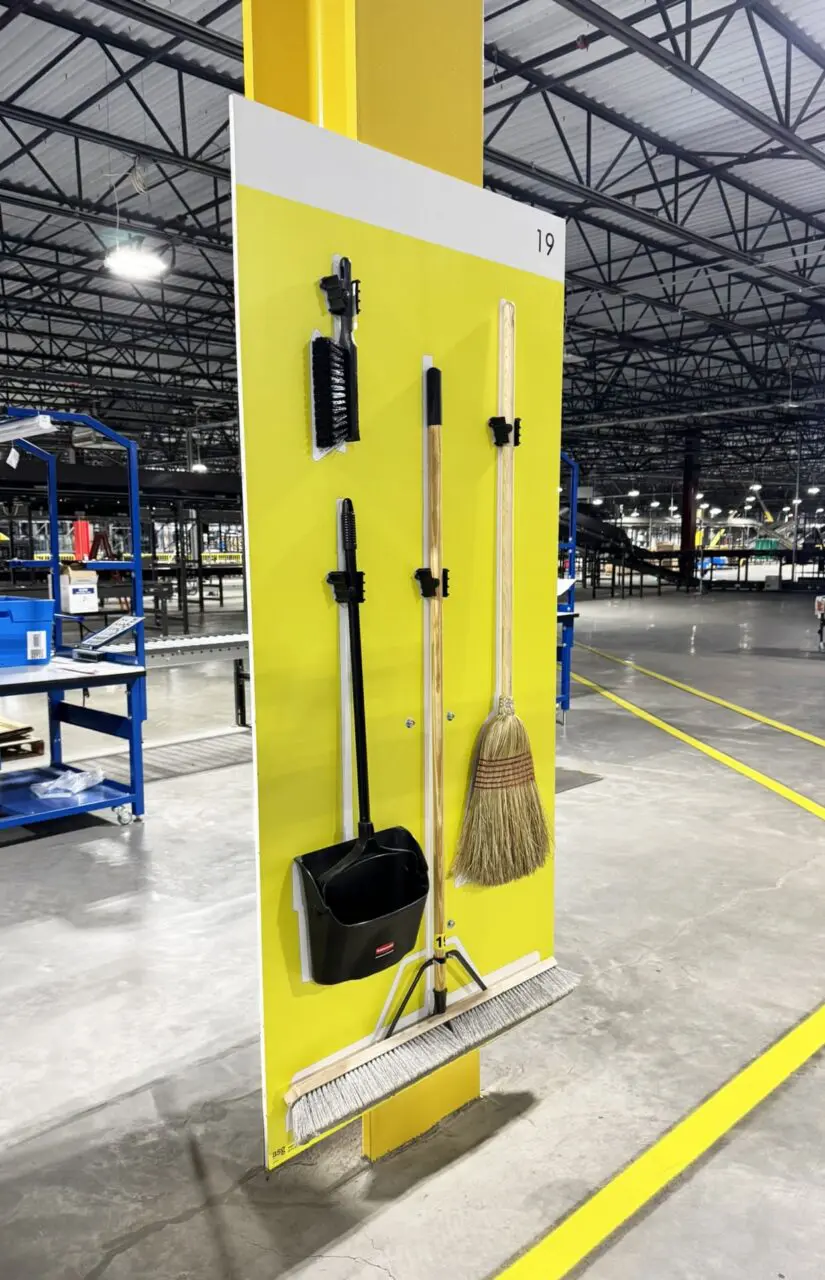
Properly designed shadow boards deliver measurable gains across safety, productivity and cost control.
Safety improves because tools are not left lying on the floor, on racking or inside equipment. In industries such as aerospace and food manufacturing, a missing tool can be a genuine hazard, so a shadow board that flags an unreturned item immediately reduces that risk.
Efficiency improves because employees no longer waste time hunting for the right tool. Tool shadow boards keep everything visible and within reach, which shortens changeover times and keeps production or picking moving.
Accountability improves too. When every tool has a designated spot, good shadow board organization makes it immediately clear who last used an item and whether it has gone missing, which naturally reduces loss and encourages employees to look after shared equipment.
Cost control follows from all of the above. Tools returned to a shadow board tend to stay in better condition than those left wherever they were last used, and fewer tools go missing overall, which reduces replacement spend over time.
Setting up a shadow board well takes more planning than simply hanging a pegboard on a wall. Good shadow board organization starts with a plan, not just a panel and a marker pen, and a structured approach avoids rework later.
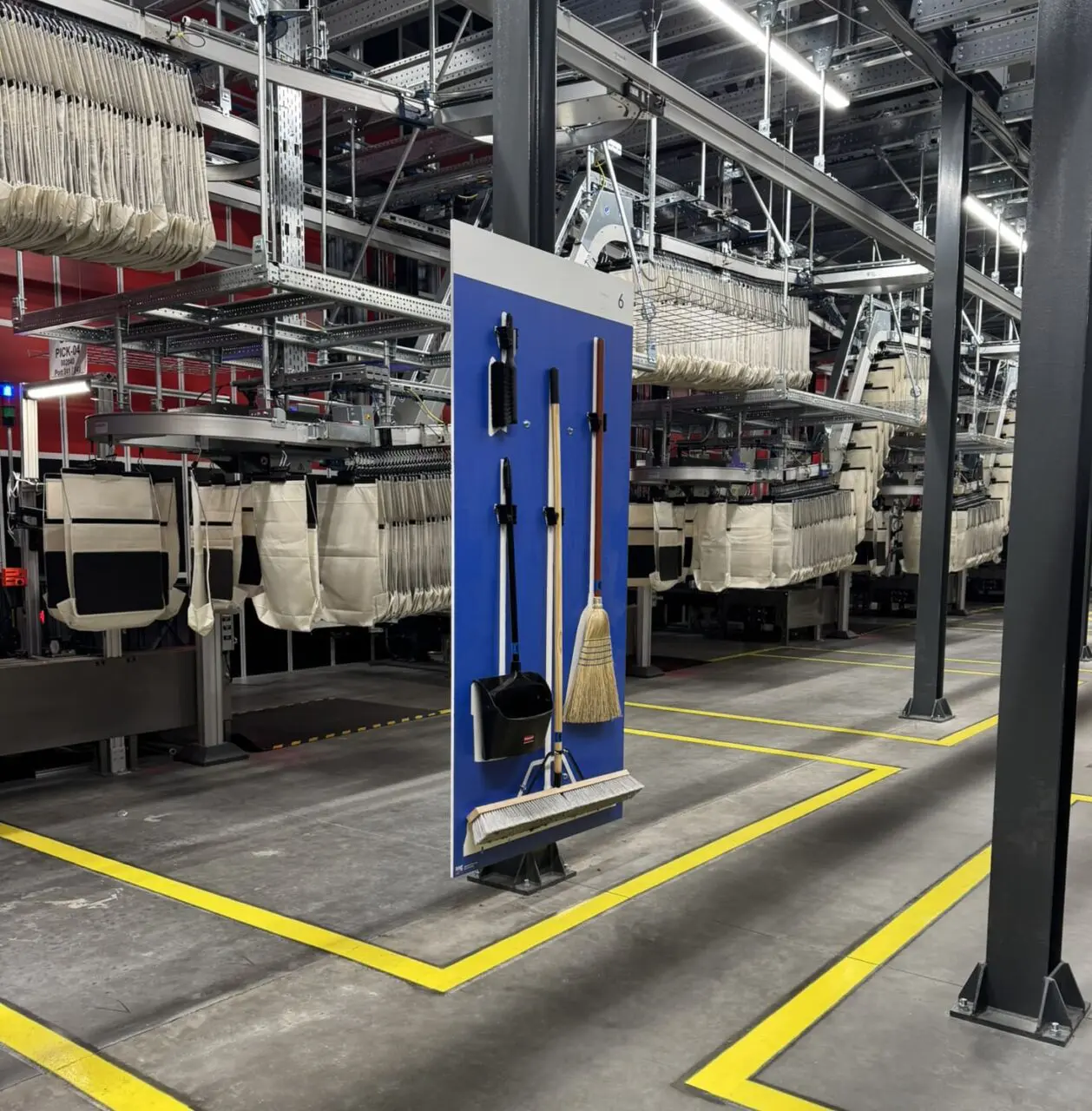
The material a shadow board is built from should match where it will live and how hard it will be used.
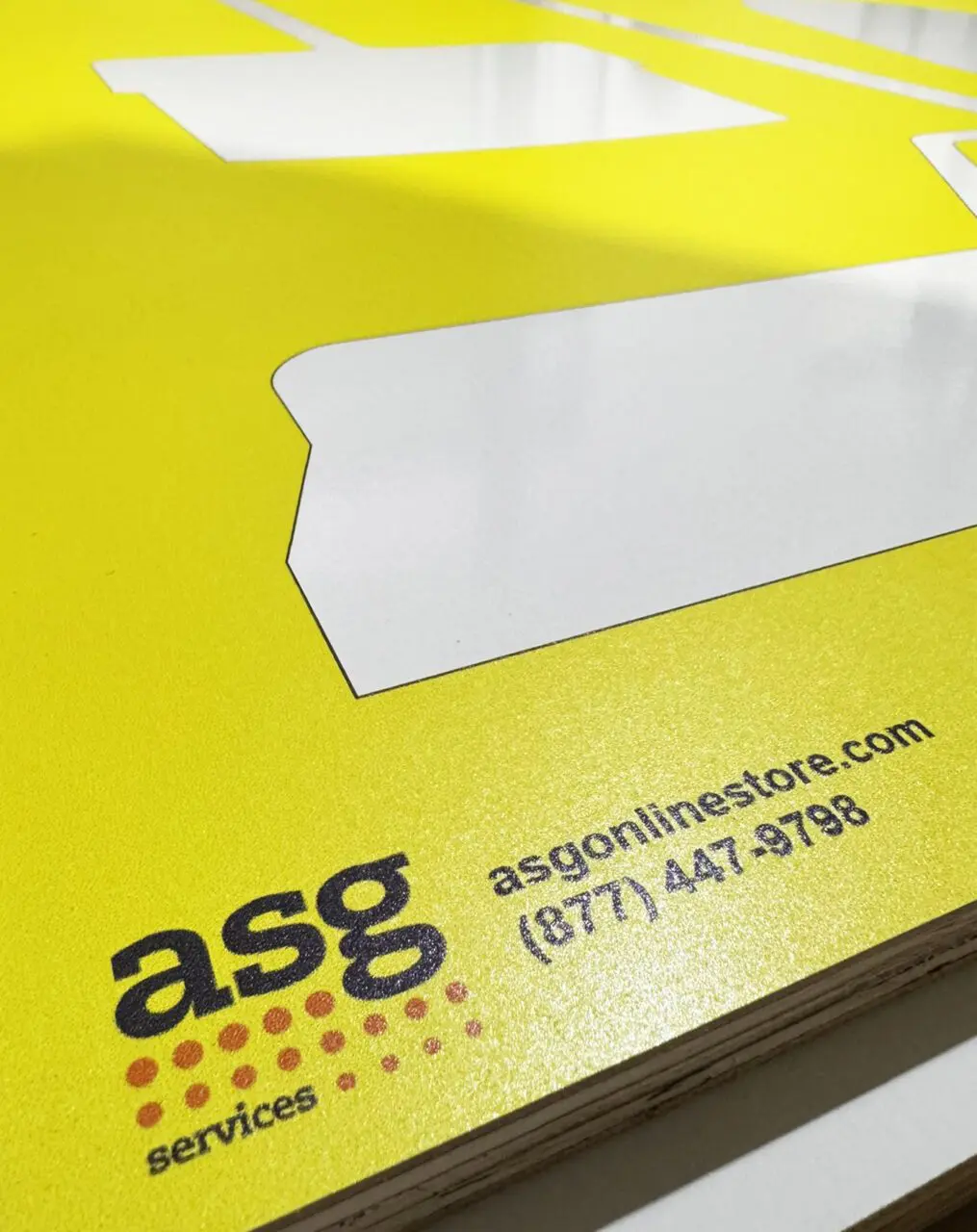
Whichever material is chosen, the graphic layer showing each tool’s outline needs to be durable enough to survive repeated contact, cleaning and, in some environments, UV exposure.
Services
ASG Services is the leading provider of fully managed installation services, our teams are employed by ASG Services, fully trained and insured to work on any customer site throughout the US and beyond.
Their work on projects has created the expertise and experience needed to apply attention to detail and accuracy needed for complete and successful installations every time.
Working with small and large companies for many years enables us to plan every project, but also adapt at speed during the process, much faster and more efficiently than others in the industry. You can read more about this on our sign installation page.
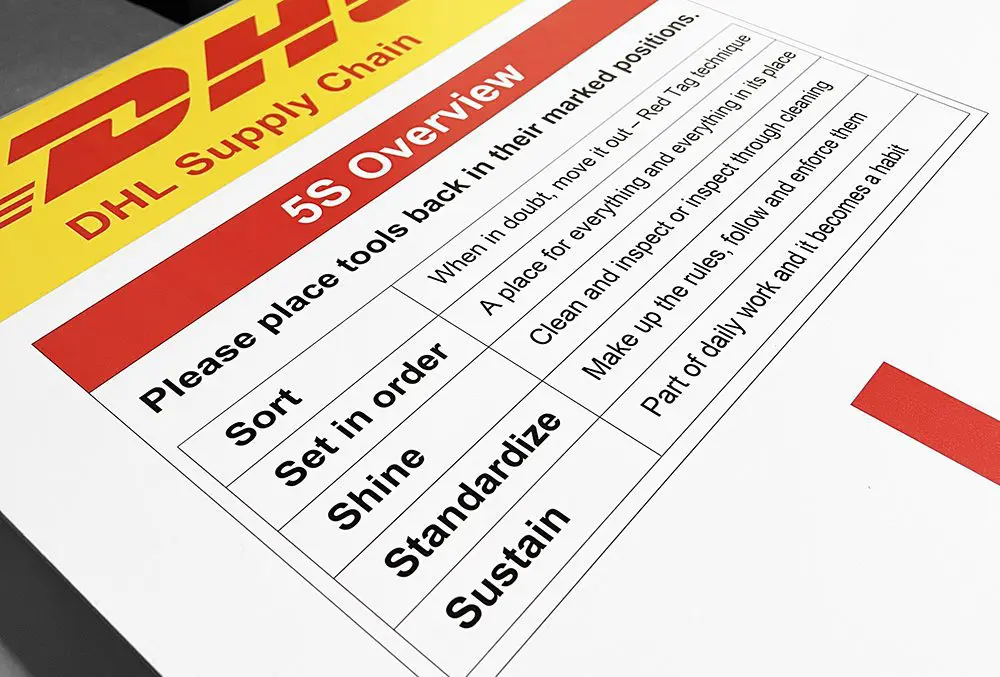
5S, originating from the Toyota Production System, is built on five steps: Sort, Set in Order, Shine, Standardize and Sustain (further detail is available from the EPA’s overview of lean thinking and 5S). 5S shadow boards sit right at the center of the “Set in Order” stage, since they give every sorted tool a fixed, labeled place.
They also support the other steps. During “Shine”, tools returned to a clean, visible board are easier to inspect and keep in good condition. “Standardize” is reinforced because a shadow board layout, once agreed, gives every shift the same reference point, so training new staff is quicker and more consistent. “Sustain” depends on habits holding over time, and a visual system that immediately shows a gap is far easier to sustain than a checklist buried in a cupboard.
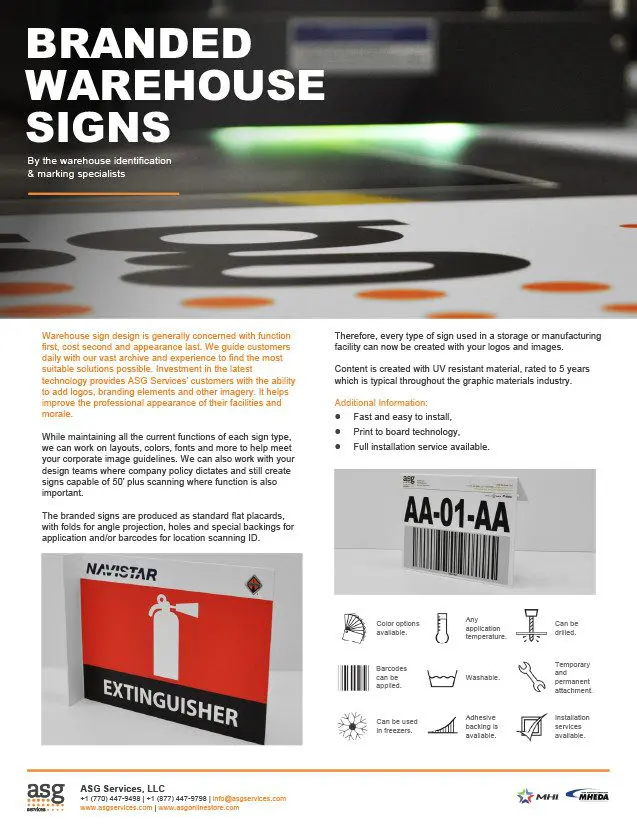
Shadow boards also work well alongside other visual management tools. Pairing them with clearly positioned 5S and safety placards and consistent warehouse signs creates a single, coherent system where tools, hazards and locations are all identified the same way across a site. In short, 5S shadow boards give the Set in Order stage something physical and visible to point to on the shop floor, rather than a rule that only exists on paper. If you’re planning a 5S rollout and want a shadow board layout designed around your own tools and site, get in touch with ASG Services for a custom quote.

Help & Advice
A standard tool rack simply holds items. A shadow board adds an outline or silhouette behind each tool, so a missing item is visible immediately rather than only being noticed when someone goes looking for it.
Not always, but loaded shadow boards are heavy, and wall fixings need to be rated to hold that weight securely. For larger boards or higher-traffic sites, a professional installation service is often the safer and faster option.
Close to the point of use, in a safe area clear of forklift routes and any required aisle marking, and at a height that does not obstruct sprinklers or sightlines (see OSHA’s general housekeeping and aisle requirements for the underlying standard). Very large facilities may need several boards positioned at intervals rather than one central point.
Yes. Facilities in manufacturing, aerospace, pharmaceuticals and warehousing all use different tools, so tool shadow boards are normally designed around the specific implements, sizes and branding of the site rather than a generic template. ASG Services’ custom shadow boards are built this way, with materials chosen to suit the environment they will sit in.
They work best as one part of a broader system. Combined with clear warehouse signs and 5S placards, shadow board organization helps create consistent, easy-to-follow visual management across a facility rather than an isolated fix at one workstation.
Our Client List Keeps Growing!































Blog
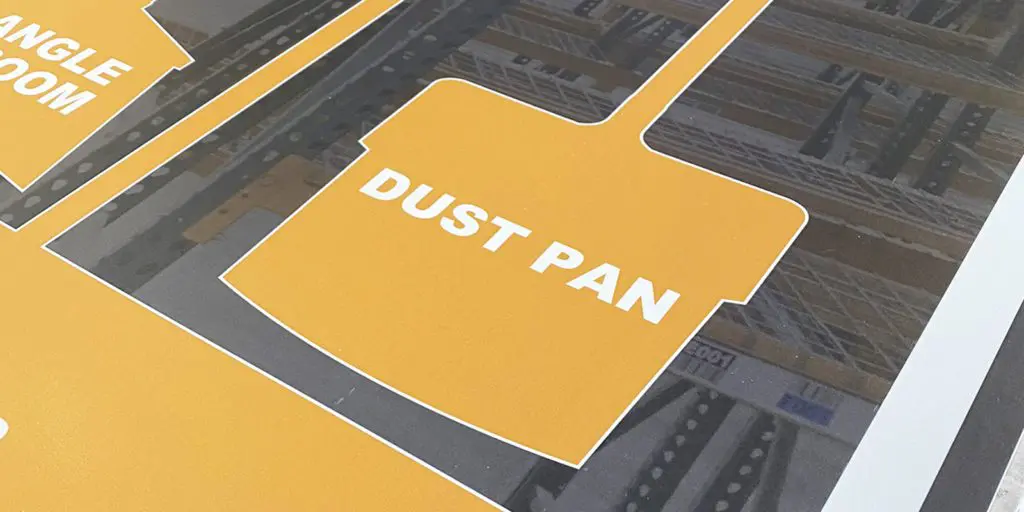
Looking at how 5S workplace shadow boards and plant productivity improvements are impacting logistics and distribution centers.
Resources & Takeaways
Shop now for reliable, high-quality 5S and safety sign products. Crafted with advanced technology for trusted durability.
Find more…
Contact us and discover how we can help.

Call us
Speak to our friendly team. Mon-Fri from 8:30am to 5:30pm.

Email us
Have a question? Not sure where to turn? Our team are always available to help.

Learn more
Industry benchmarks are set on what we do and the quality of our products, find out why.

Download…
Information sheets, location data files, and white papers for you to take away.