
Signs
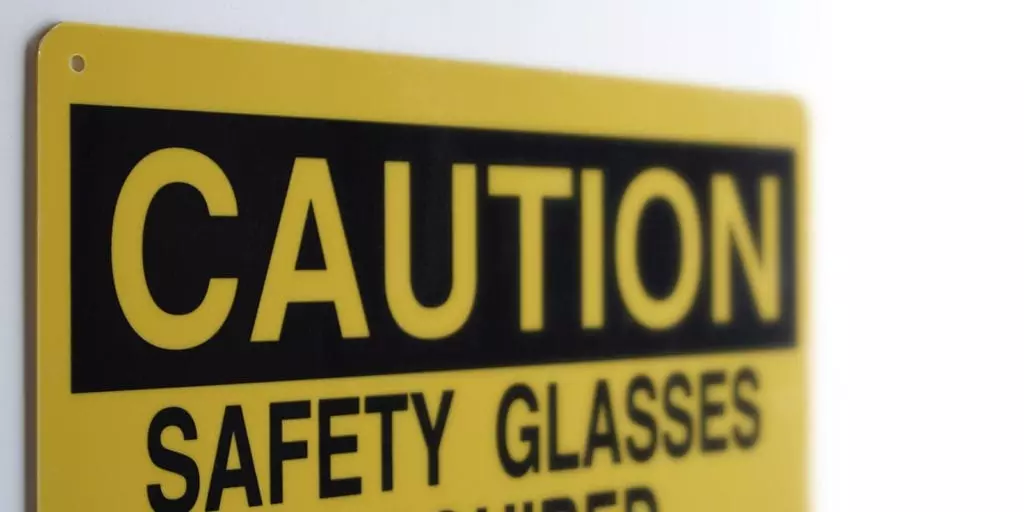
Our custom design services concentrate on clear messages and familiar imagery. The purpose of 5S and safety signs, are to quickly inform and to highlight safety issues in the vicinity.
5S solutions for logistics and distribution
ASG Services produce 5S and safety signs to suit the individual needs of our customers. Custom design, fabrication, and installation services are available under one roof.
Safety signs are available from many suppliers, even general retail. Ours are more specific to industry, warehouses, and distribution centers. Utilizing our custom design and production capabilities, we provide 5S and safety signs to very specific requirements.
We also offer standard warehouse centric signs for fast delivery if needed. These are the less common types.
5S and safety signs are included in the wider warehouse sign and label project, which also runs together with our very popular warehouse striping services.
The 5S Methodology:
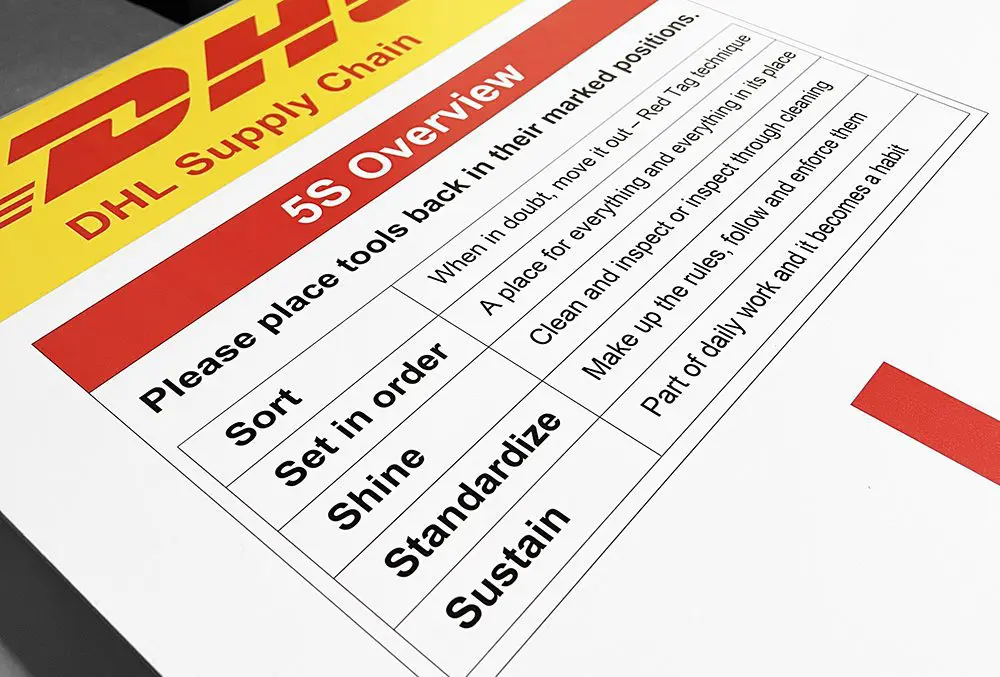
5S workplace organization is built around five sequential steps: Sort, Set in Order, Shine, Standardize, and Sustain. Each step has a defined purpose, and placards play a specific role at every stage.
Sort (Seiri): removes anything that isn’t needed in the immediate work area. Teams commonly use red tags to flag items awaiting a decision, then clear the area once that decision is made.
Set in Order (Seiton): assigns a fixed location to everything that remains. This is where 5S placards and shadow board labels do most of the work: every tool, bin, and piece of equipment gets a labeled home, so a missing item is obvious at a glance.
Shine (Seiso): keeps the area clean enough to reveal problems, such as leaks or wear, before they turn into failures.
Standardize (Seiketsu): turns the first three steps into a routine, documented with placards, checklists, and color-coded zones so every shift follows the same layout.
Sustain (Shitsuke): the ongoing discipline that keeps the system in place. A placard that clearly shows where something belongs makes it easy to notice, and correct, when it isn’t.
A first pass through Sort, Set in Order, and Shine typically takes one to two weeks for a single work area. Standardize and Sustain are continuous, and are usually reviewed over three to six months as habits form.
Placards and other lean manufacturing labels give each of these steps something physical to point to, which is what makes 5S stick on the shop floor once the initial push is over.
ASG Services custom designs concentrate on clear messages and familiar imagery.
The purpose of a 5S board or safety sign is to quickly inform of potential safety issues in the area or as an advisory message. They must grab attention and communicate swiftly.
Where images can be used to portray a message, we would highly recommend their use. Images and text are the most prominent methods of education after verbal instruction, they reinforce and give reassurance.
Customer branding is a very important and popular addition to the signs we produce, so consider how you might integrate it with your messaging.
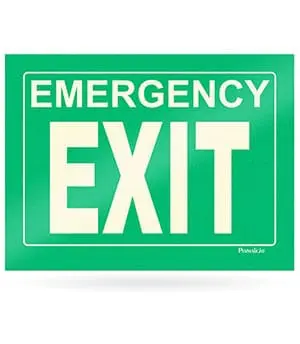
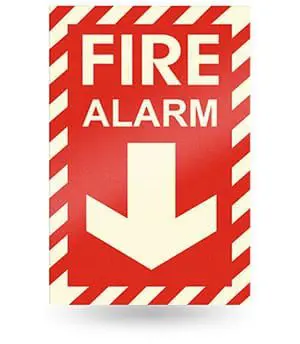
There is no single mandated color standard for 5S placards, but a consistent industry convention has developed, because it is simple to teach and hard to misread:
OSHA sets specific requirements for red and yellow under 1910.144, and our OSHA floor striping standards guide covers the wider floor-marking rules in more detail. Beyond those two colors, the scheme is left to the facility, which is why consistency matters: once a color convention is chosen, every placard, shadow board outline, and floor line should follow it without exception, across every building and every shift. That kind of discipline, more than any single color, is what separates effective 5S workplace organization from a set of lean manufacturing labels nobody follows.
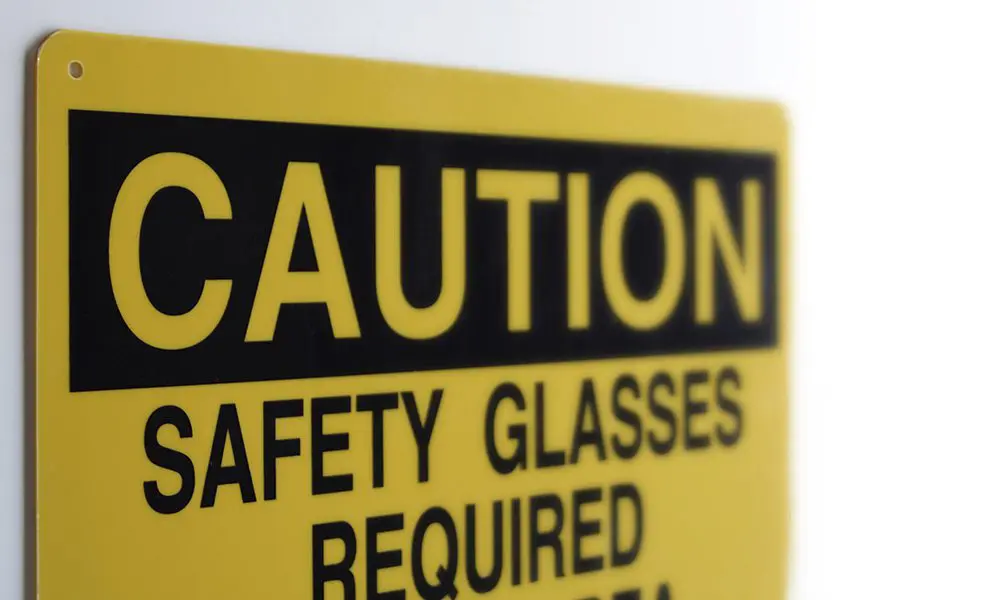
Once we have determined the design and content of the safety sign, we then consider the materials which can be used.
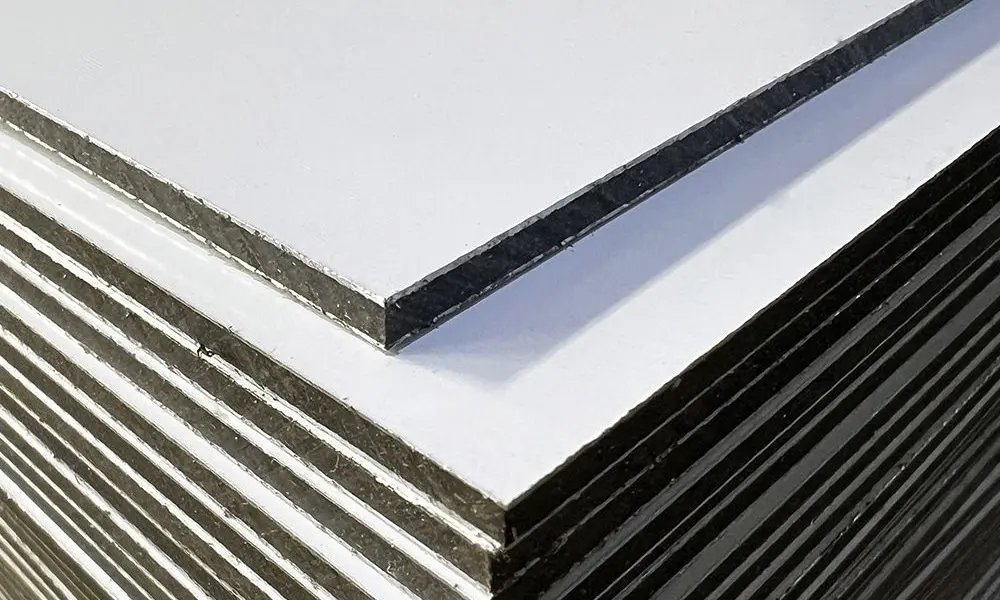
Internal facility signs are often produced in small format and because they are inside, a lower spec material can be chosen to save cost. Durability is never compromised, so we prefer not to use the cheapest materials available as they often fail quicker and look poor. PVC, aluminum composite and MDO are the choice for most.
Weather plays a major role in choosing external sign materials, and industry standards are always readily available. Aluminum composite is both durable and easy to work with, so the overall cost is more than acceptable.
Reflective options are also available for facilities who can utilize this upgrade.
The signs we make are not always flat. Depending on their use, they may need very specific formations, which our production equipment and team are more than capable of handling.
The face of signs can be angled in various directions to improve visibility, installation, and to provide direction. We therefore invest in the latest digital imaging processes, fabrication equipment and sortation methods.
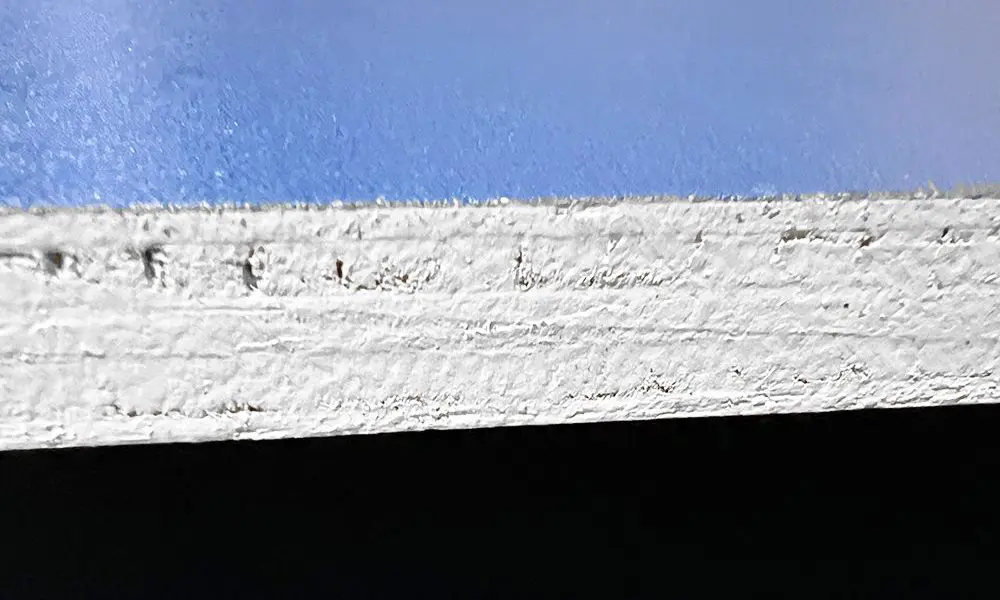
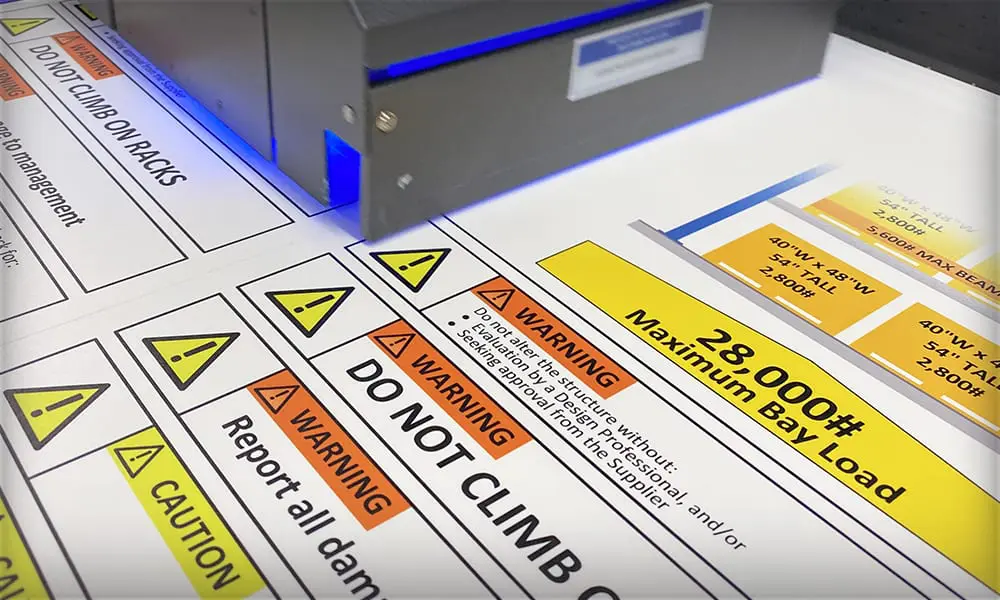
High resolution production systems allow us to print retail grade signage, which is then used as functional signs in industry settings. It also improves lead times which can be critical for customers, all resulting in our 5S signs being far more professional and appealing than in the past.
Placement determines whether 5S placards actually get used. A well-designed sign in the wrong spot gets ignored just as often as no sign at all.
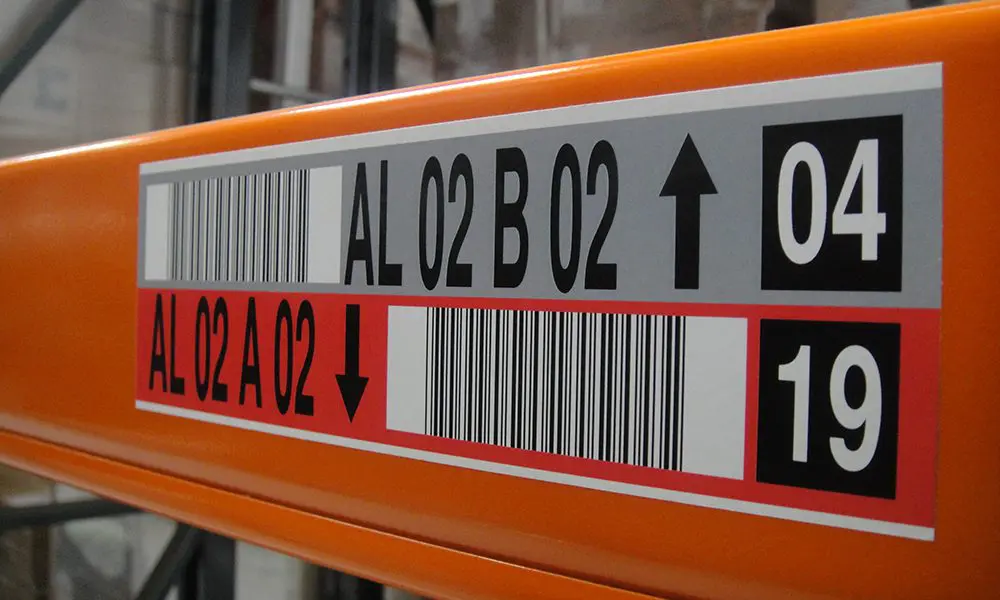
Mount placards at eye level wherever the viewing point is fixed, typically 57 to 65 inches from the floor for an adult standing nearby. For placards read from a distance, such as aisle signs or hanging barcode signs, size and mounting height should be set for the sightline from the furthest point they need to be read, not from directly underneath.
Keep clearances in mind. Placards should never obstruct sprinkler spray patterns, block emergency routes, or interfere with racking access. Where a facility already has directional or location signage installed, new 5S placards should follow the same height convention so the overall visual system stays consistent rather than competing for attention.
5S shadow board labels need to sit directly on or immediately beside the tool outline they refer to, not on a separate panel nearby: the label and the shadow should be read as a single unit.
Placement standards work best when they are written down and applied facility-wide, not decided sign by sign. That consistency is also what keeps the Sustain stage of 5S working once the initial rollout is finished. Our sign installation team can advise on mounting heights and clearances as part of a full installation project.
Services
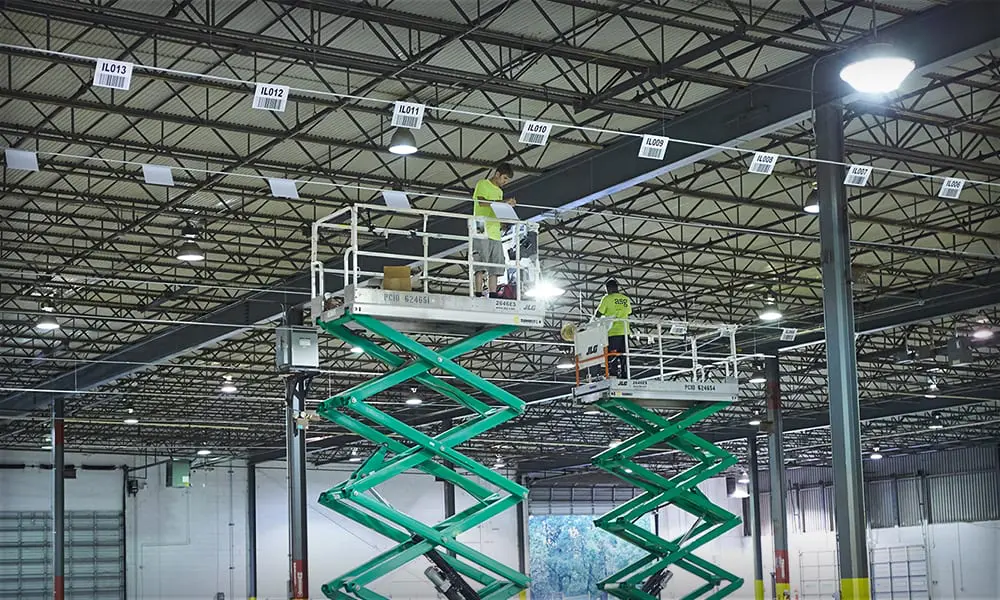
Safety signs are not generally a product the customers require us to install, however as part of larger projects, they are very common.
We are frequently asked to fit them during larger warehouse sign installations. This is both in live operations and new construction buildings. Along with warehouse striping and warehouse hanging signs, we have the hardware and skills required to fit almost any type of 5S or safety sign.
Our teams are fully trained and insured to work on all customer sites throughout the US.
Product range
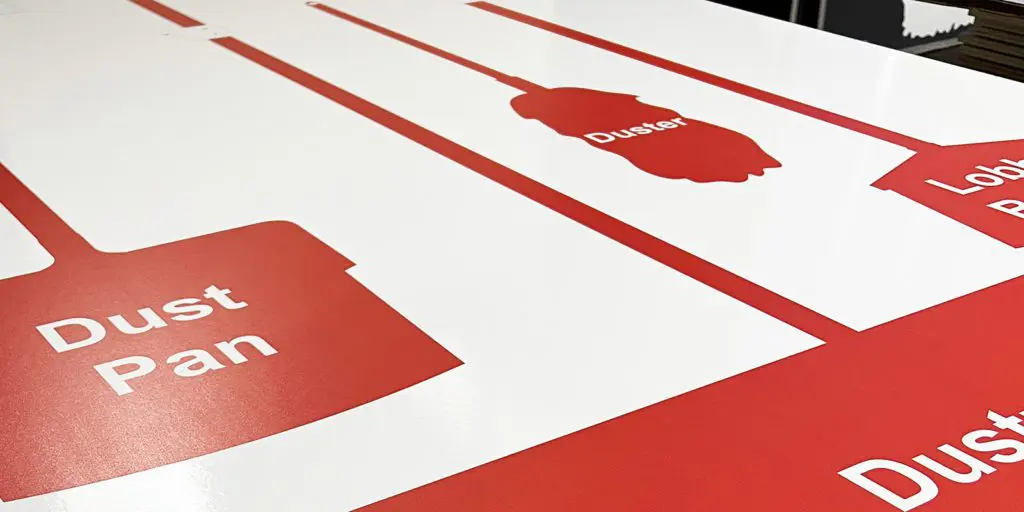
Workplace custom shadow boards are the familiar organization tool in warehouses and distribution centers.
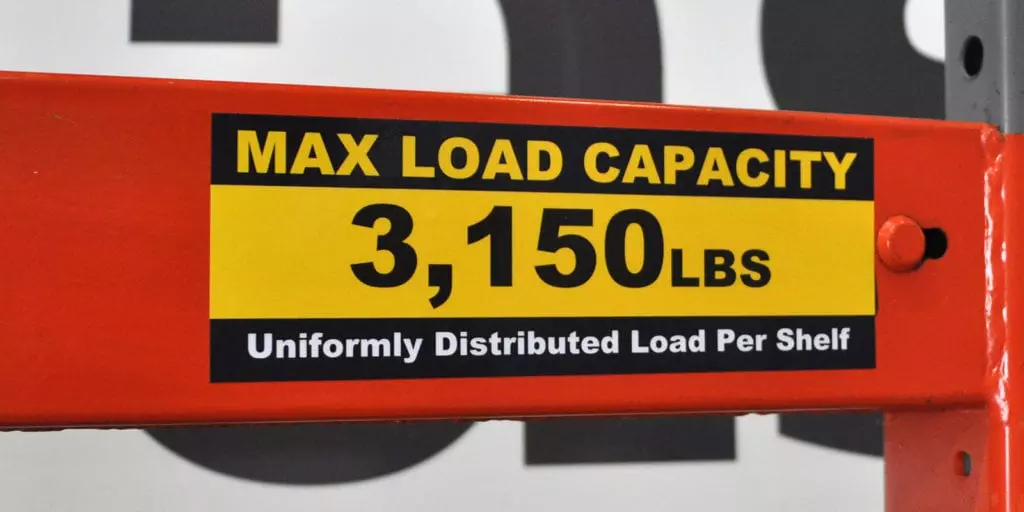
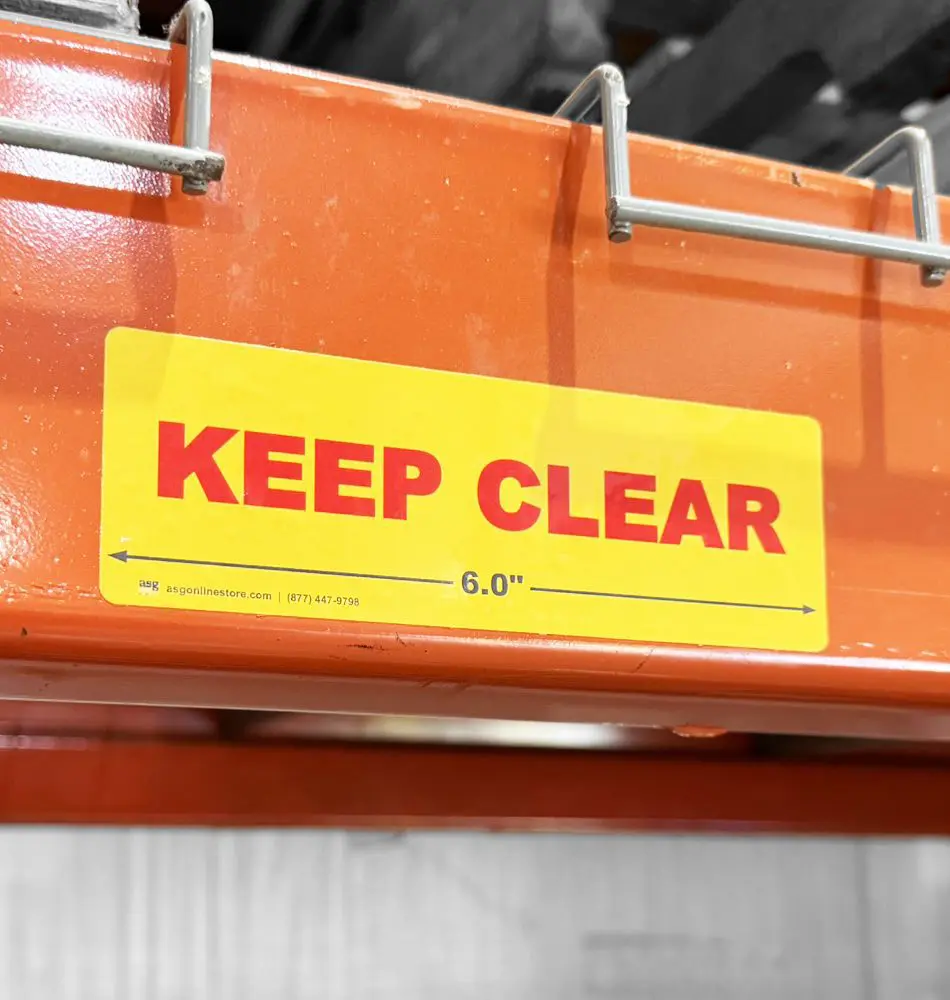
Safe use of pallet racking and shelving is not limited to careful loading of heavy items, in fact the position on the beam and how many heavy items will be on that beam is critical to the overall structural strength and integrity.
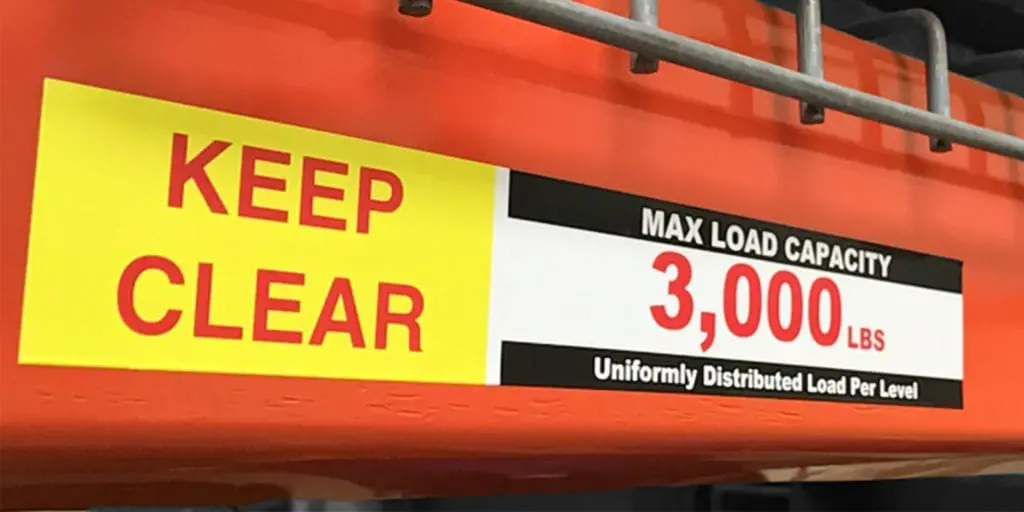
ASG Services produce flue space labels for use on warehouse racking as well as most other custom warehouse labels for use in the logistics and distribution industry.
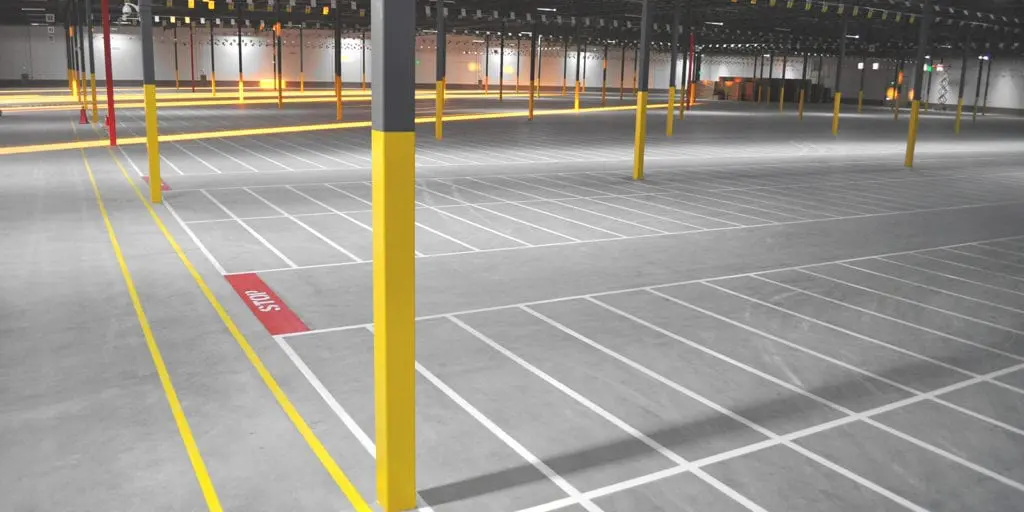
ASG Services have led the way for many years, in marking technology, through concrete preparation, floor coating materials and application methods.
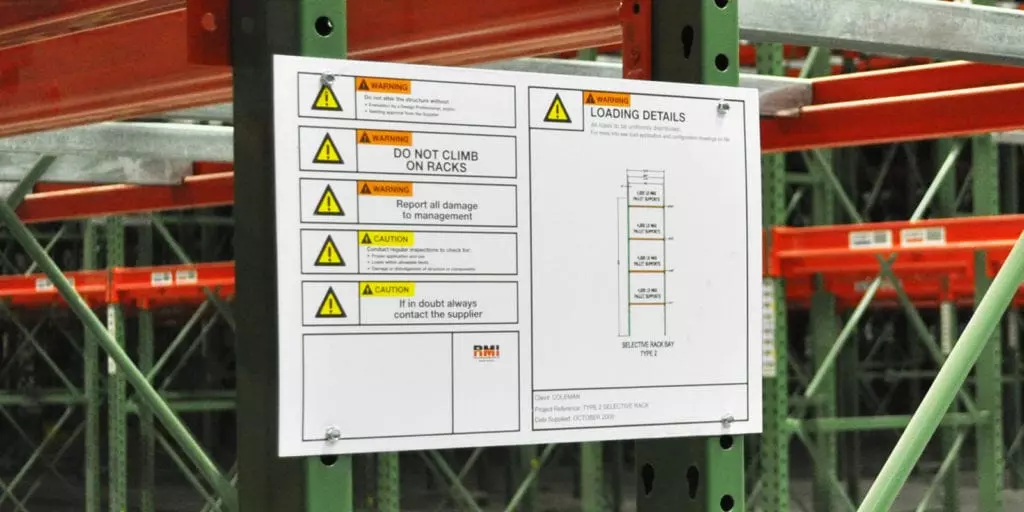
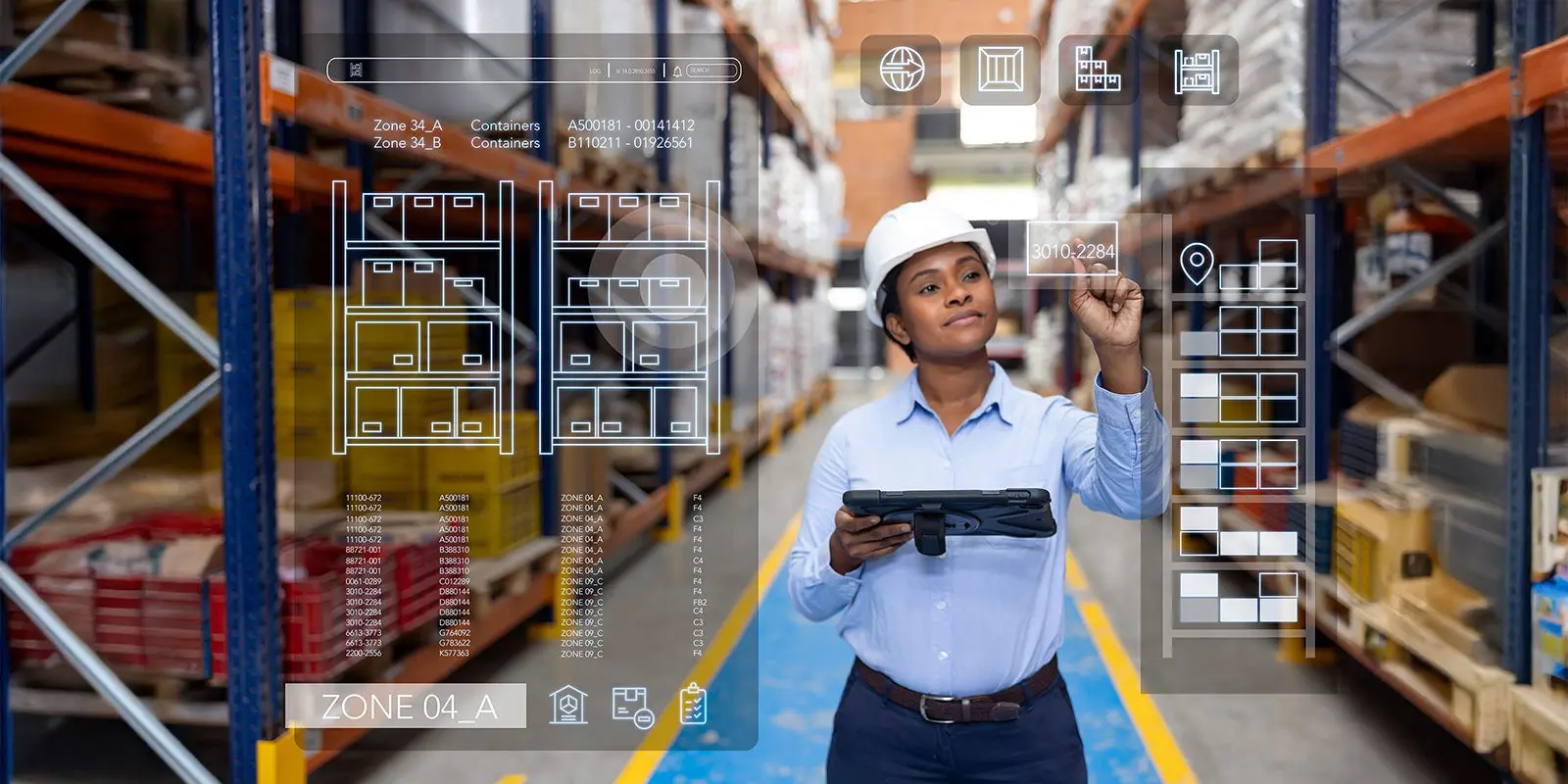
Designed to present rack loading information, frame and structural detail, supplier contact points, as well as site references to help improve safety and be a data reference point, all with your specific content and produced from durable materials.
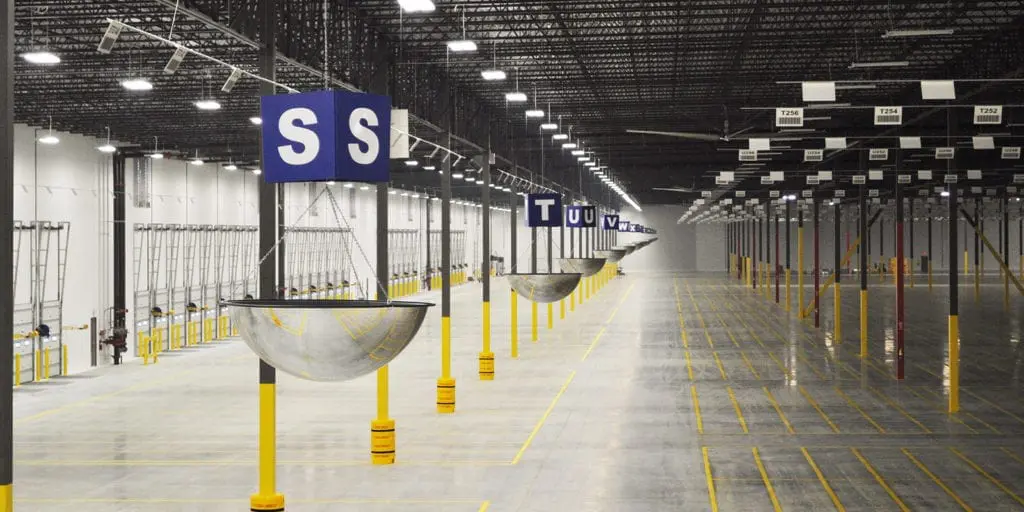
ASG Services’ production team can create every variation or warehouse sign needed, as well as matching previous designs.
Need something less custom? Buy it online…
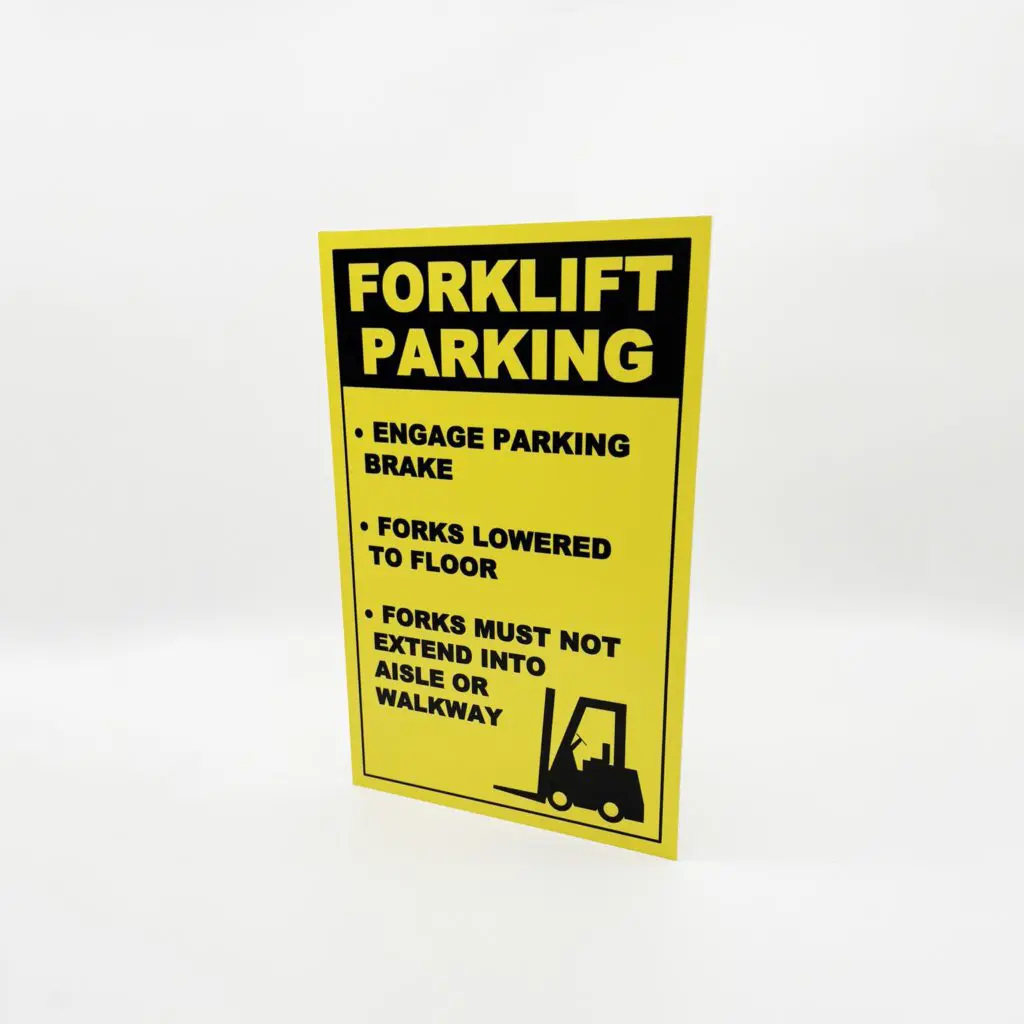

5S solutions for logistics and distribution
The clearest evidence that 5S workplace organization works is what happens after it goes in: fewer minutes spent searching for tools, faster audits, and a layout that looks the same on every shift, whichever crew is on the floor.
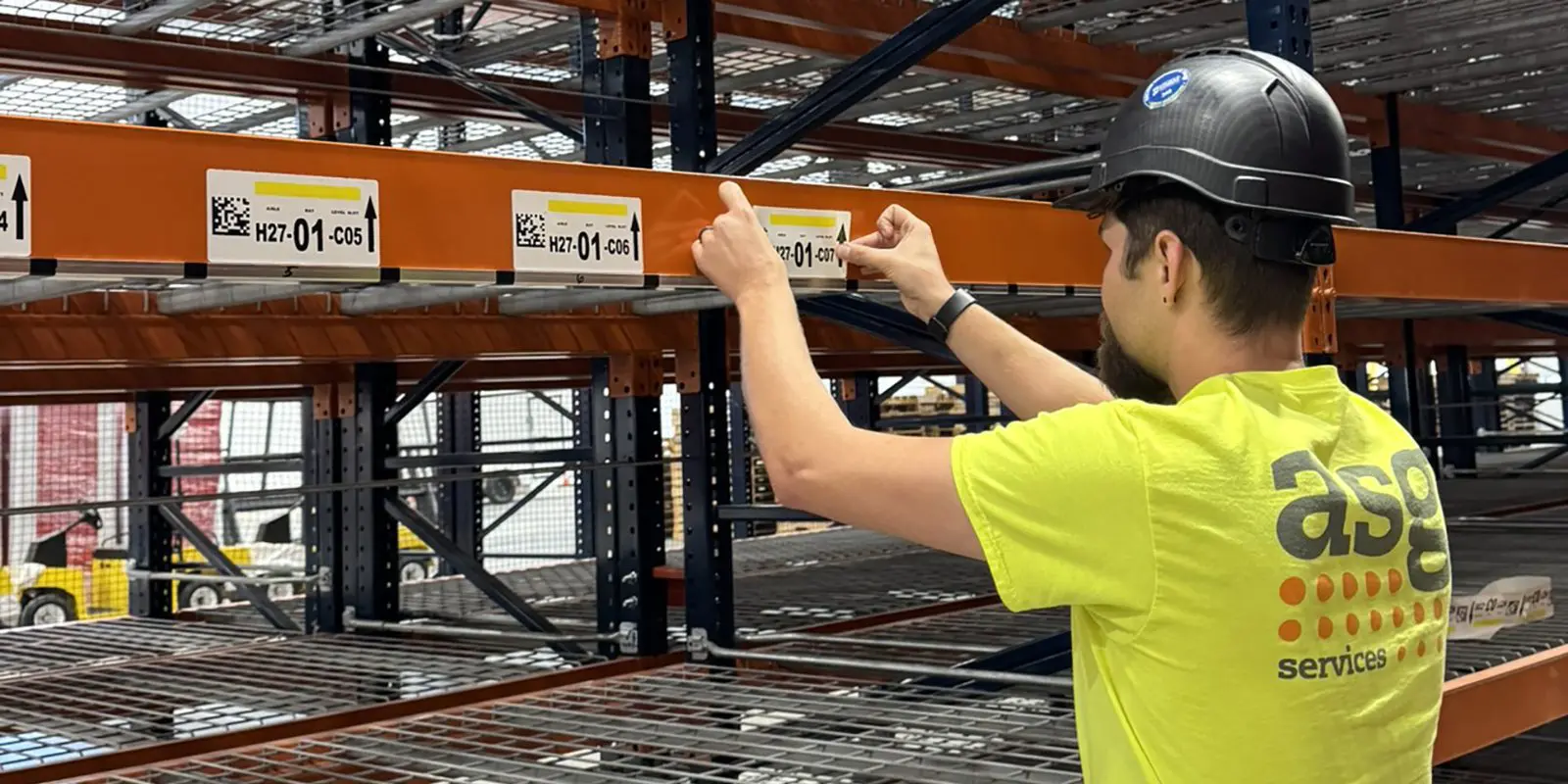
Consistent workplace organization depends on the same production and installation experience behind any large signage project: accurate reference-file sequencing, trained installation crews, and materials built to survive daily contact from forklifts and foot traffic. ASG Services installs 5S shadow board labels, placards, and other lean manufacturing labels as part of the same live-facility projects that produce our rack labeling, signage, and striping work, including a single site project covering more than 67,500 rack labels and 356,000 shelf labels.
See our full project case studies for further examples of labeling, signage, and floor striping delivered at scale, across both live and newly built facilities.

Help & Advice
Yes, we supply all component items so customers can finish the signs themselves. It is rare we are asked but we appreciate that customers like to self-customize.
Lead times are variable, owing to quantity, complexity and production volumes at the time of order. We prefer to work swiftly with every order since we never know the scale or quantity of the next, so you can be assured that we will not delay the process once your order is placed. We do typically aim for a one-to-two-week turnaround from order confirmation.
There are several things to consider with the height of signs, they are:
Absolutely, we would be happy to do this with any order.
Almost any color can be supplied in board and character material. Customers looking to match company brand colors or a previous scheme can be accommodated with a huge range of color options to choose from.
For those looking for more intricate designs or information and diagram signs, colors are unlimited. We utilize digital print technologies for these which are almost limitless.

































Find more…
Contact us and discover how we can help.

Call us
Speak to our friendly team. Mon-Fri from 8:30am to 5:30pm.

Email us
Have a question? Not sure where to turn? Our team are always available to help.

Learn more
Industry benchmarks are set on what we do and the quality of our products, find out why.

Download…
Information sheets, location data files, and white papers for you to take away.
