
Articles
Warehouse identification and floor marking systems

Overview
What OSHA requires
OSHA requires warehouses that use forklifts or other mechanical handling equipment to mark their permanent aisles and passageways. The rule is 29 CFR 1910.176(a). It does not set a color or a line width, so each facility decides how to mark its floor and must be able to show that the markings are clear and kept in good condition.
That short rule causes a lot of confusion. Many guides still point to a standard that no longer mentions floor marking, and others present color charts as if they were law. This guide sets out what the OSHA text says today, where the common advice comes from, and how to plan a floor that will hold up in an inspection. For a distribution center, getting this right protects people on the floor and avoids citations, repeat work and downtime.
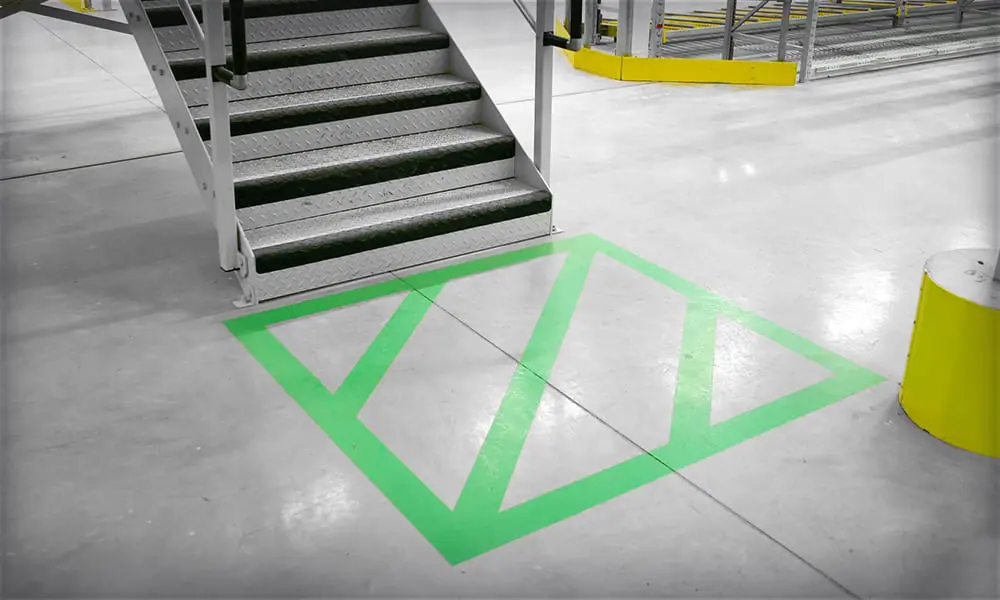
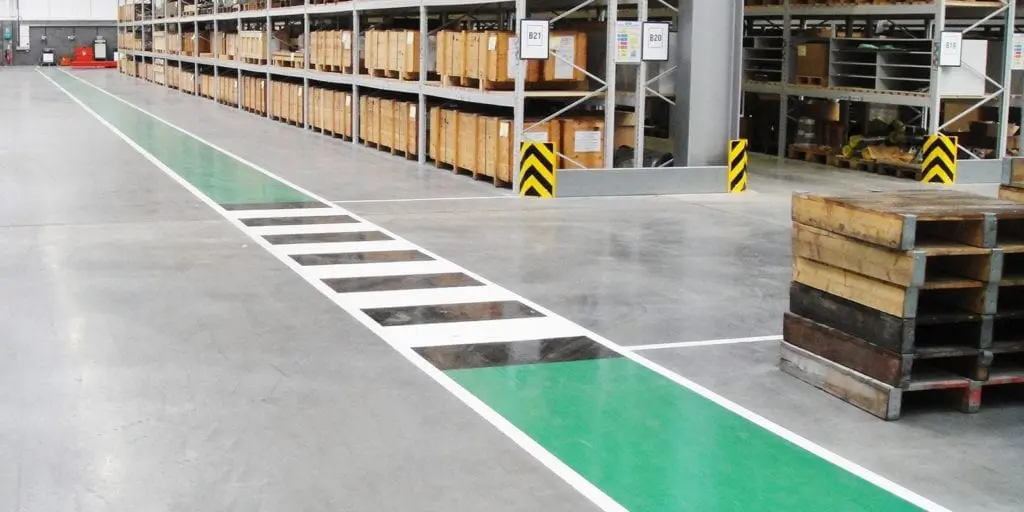
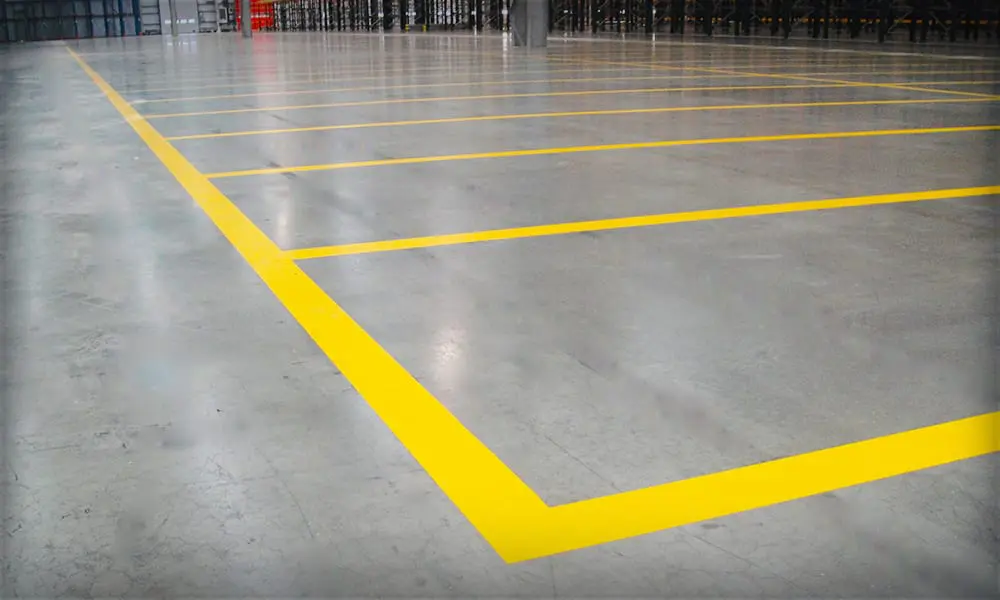
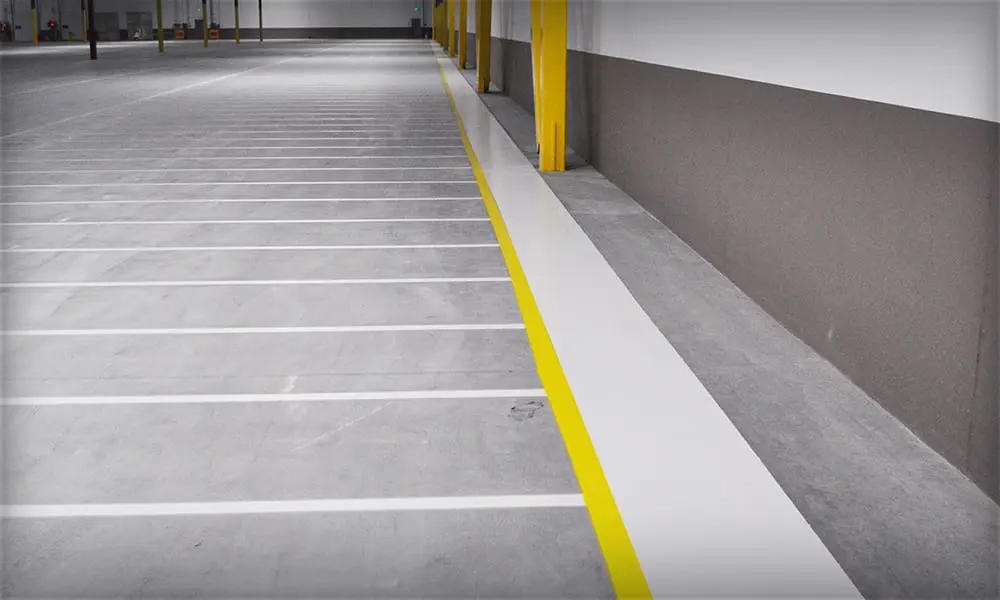
The requirement applies where mechanical handling equipment is used. It has three parts. You must allow enough safe clearance in aisles, at loading docks, through doorways and wherever equipment turns. You must keep aisles and passageways clear and in good repair, with nothing in them that could create a hazard. You must mark permanent aisles and passageways.
OSHA does not define what appropriate marking looks like. In practice an inspector looks at whether a driver and a pedestrian can each tell where the travel route is. Worn, patchy or missing lines are the usual problem. In a 2016 decision, a judge upheld an OSHA citation under 1910.176(a) against a manufacturer whose pedestrian aisle lines had worn away, as recorded in this Occupational Safety and Health Review Commission case. For an operator, that means markings need upkeep in the same way racking and dock equipment do.
Until 2016, paragraph (b)(2) of 1910.22 said that permanent aisles and passageways must be appropriately marked. OSHA rewrote the walking and working surfaces rules in a final rule published on November 18, 2016, and that sentence was removed from 1910.22. OSHA also cancelled its older directive on marking aisles under that paragraph. The same wording remains in force in 1910.176(a).
This matters when you write a site standard or respond to an audit. A policy that cites 1910.22(b)(2) is quoting text that is no longer in the standard, which weakens it in front of an inspector or an insurer. Cite 1910.176(a) for marking and 1910.22 for the condition of the floor.
| Standard | What it covers | What it means for your floor |
|---|---|---|
| 29 CFR 1910.176(a), handling materials | Safe clearances for aisles, loading docks, doorways and turns where mechanical handling equipment is used. Aisles must be kept clear and in good repair, and permanent aisles and passageways must be “appropriately marked”. | This is the marking requirement. If forklifts or similar equipment run in your building, your permanent travel routes need visible markings. |
| 29 CFR 1910.22, walking and working surfaces | Floors kept clean, orderly and free of hazards, safe access to and from work areas, and regular inspection and repair. | It no longer mentions marking, but it does require you to inspect surfaces and fix hazards. Clear walkways and zones make that duty easier to meet and to show. |
| 29 CFR 1910.144, safety color code | Red for danger and emergency stop controls. Yellow for caution and for physical hazards such as striking against, stumbling, falling, tripping and being caught in between. | It does not mention floors or aisles. It is the reason yellow is the usual choice for aisle lines and hazard edges. |
OSHA does not require particular colors for aisle lines. An OSHA interpretation letter from 1972, now archived, said lines may be any color as long as they clearly define the aisle, and that any width of 2 inches or more is acceptable, with 2 to 6 inches recommended. OSHA lists the letter as historical, so treat it as guidance on what has been accepted and not as a current rule.
Because the rules leave the choice open, consistency does most of the work. People move between sites and expect the same color to mean the same thing. These are the conventions we see most often and use on our own projects. They are common practice, not OSHA requirements.
Write your color scheme down and apply it across every building you run. A documented scheme is quicker to train, cheaper to maintain and easier to defend than one that has grown area by area.
OSHA updated the Hazard Communication Standard, 29 CFR 1910.1200, in May 2024. Employers had until November 20, 2026 to update workplace labeling, written hazard communication programs and employee training for newly identified hazards of substances. The matching date for mixtures is May 19, 2028. OSHA set both dates in a final rule published on January 15, 2026. Facilities in states that run their own OSHA approved plans should check with the state agency, because state dates can differ.
The Hazard Communication Standard covers chemical labels, safety data sheets, written programs and training. It does not add any floor marking requirement, and floor lines do not count toward meeting it. The link is practical. A hazard communication review puts safety managers on the floor looking at where chemicals are stored and handled, and that is a sensible time to check that the aisles around those areas are clear, in good repair and marked as 1910.176(a) requires. Doing both in one walk saves a second shutdown and a second visit from contractors.
ASG Services designs and installs warehouse striping and floor marking across the US with our own installation teams, including line striping drawings for new layouts. Our OSHA floor striping page shows typical layouts for walkways, exits and dock bays. Call 877.447.9798 or contact us to talk through your facility.
Under 29 CFR 1910.176(a), a workplace that uses mechanical handling equipment must mark its permanent aisles and passageways, allow safe clearances and keep those routes clear and in good repair. OSHA does not set colors or widths, so the facility chooses a method and keeps it visible.
The marking requirement is in 29 CFR 1910.176(a), which covers handling materials. It applies where mechanical handling equipment such as forklifts is used. 29 CFR 1910.22 covers the condition of walking and working surfaces, and 29 CFR 1910.144 covers safety colors.
No. The marking sentence was removed from 1910.22 by the walking and working surfaces final rule published on November 18, 2016. The standard now requires clean, orderly and hazard free floors, safe access and regular inspection. The marking requirement remains in 1910.176(a).
OSHA does not require a color for aisle lines. An archived 1972 OSHA interpretation letter said any color is acceptable if the lines clearly define the aisle. Yellow is the usual choice because 29 CFR 1910.144 names it as the color for caution and physical hazards.
No current OSHA standard sets a line width. An archived 1972 OSHA interpretation letter treated any width of 2 inches or more as acceptable and noted that recommended widths ran from 2 to 6 inches. Wider lines are easier to see from a forklift seat in a large building.
No. The November 20, 2026 date covers workplace chemical labeling, written programs and training under 29 CFR 1910.1200. It adds no floor marking requirement. It is a useful prompt to check that the aisles around chemical storage areas are clear and marked under 1910.176(a).
OSHA sets no interval for markings. 29 CFR 1910.22(d) requires walking and working surfaces to be inspected regularly and as necessary, so the simplest approach is to check markings during those inspections and repair lines once they no longer define the route clearly.
Product Range
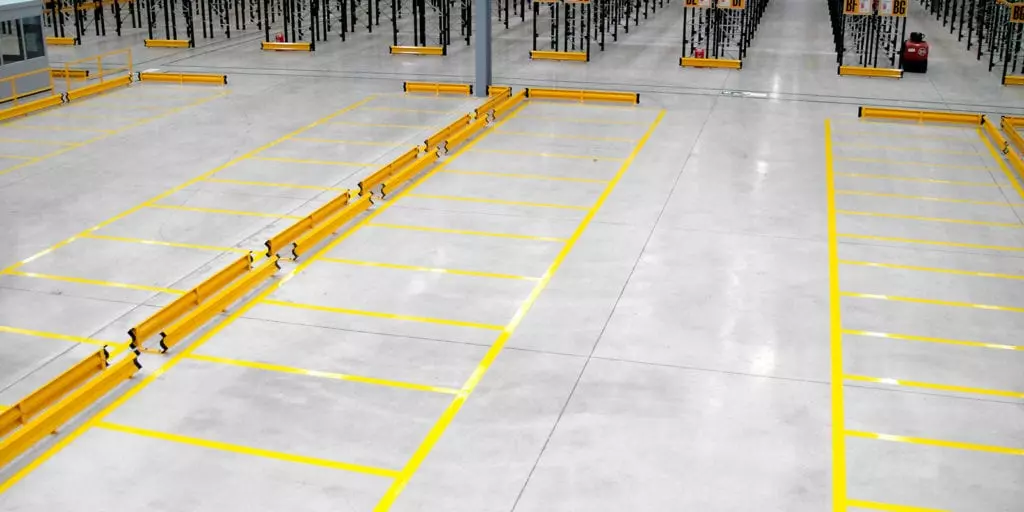
Durable Striping
The premium warehouse striping solution is ASG Services world renowned embedded striping.
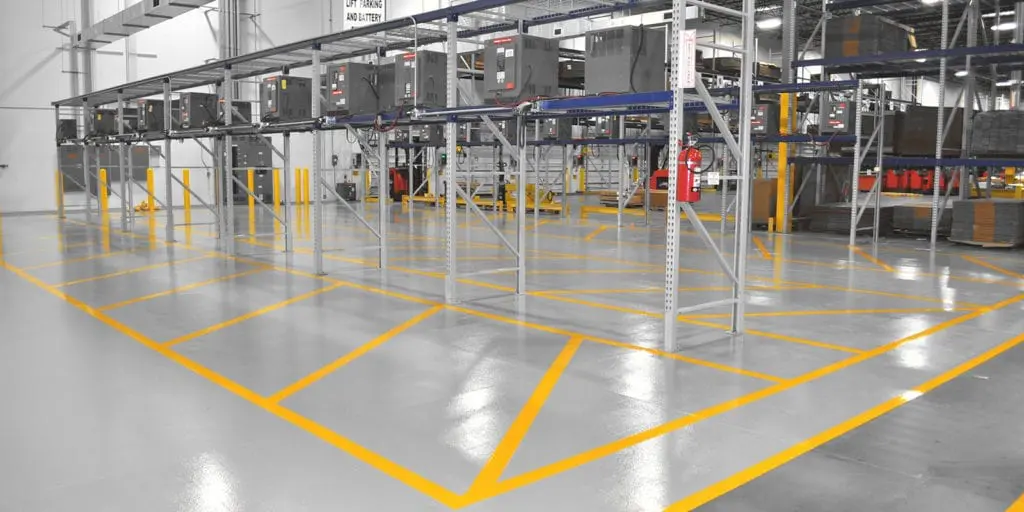
Floor Coatings
Throughout the warehouse and distribution industry, ASG Services have provided floor coatings for new and existing facilities.
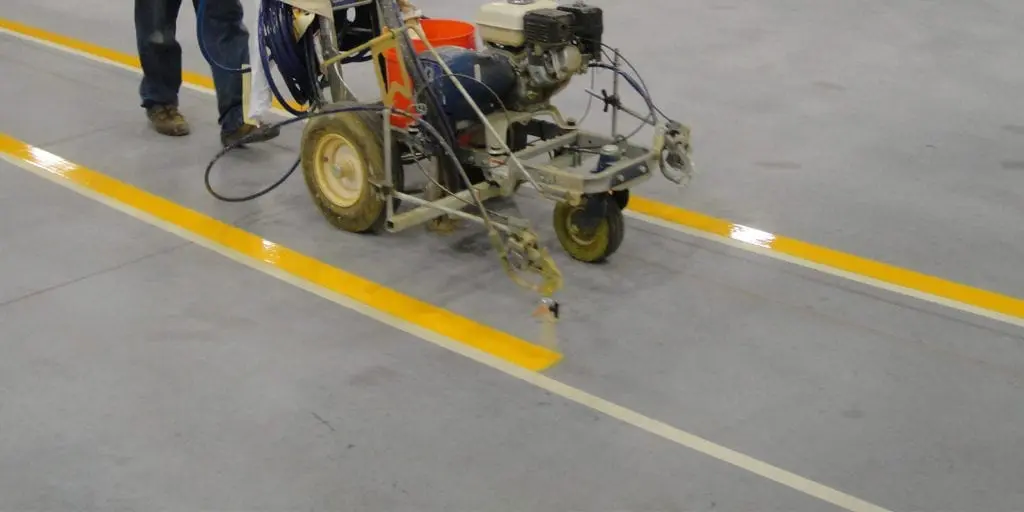
Epoxy Floor Striping
Unprepared floor striping is a term given to epoxy paint which is applied to the floor without any concrete preparation taking place.

External Striping
Line striping for trailer parking lots in distribution center yard areas improve space management and safety in your workplace, we help you achieve the two with external and internal installations.

Floor Tape
Adhesive floor striping tape is easy to install, clean to use and can be applied quickly if needed. ASG Services provide several options to suit durability and budget needs.

OSHA Floor Striping Standards
ASG Services provide line striping installation to help companies achieve OSHA floor striping standards.
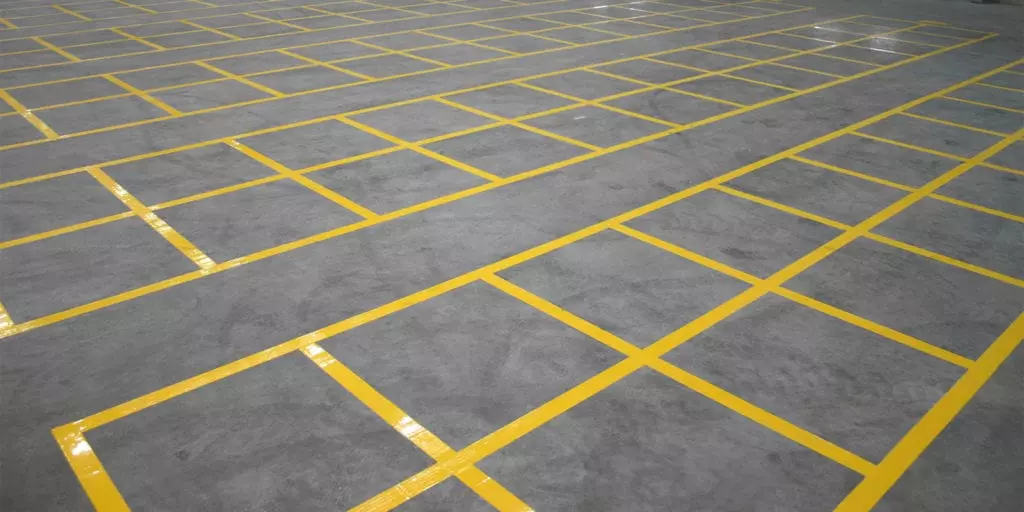
Shot Blast Floor Striping
The preparation method used, of removing the concrete surface using a shot blast machine, combined with an epoxy resin compound or similar applied, is the most cost effective high performing solution available.
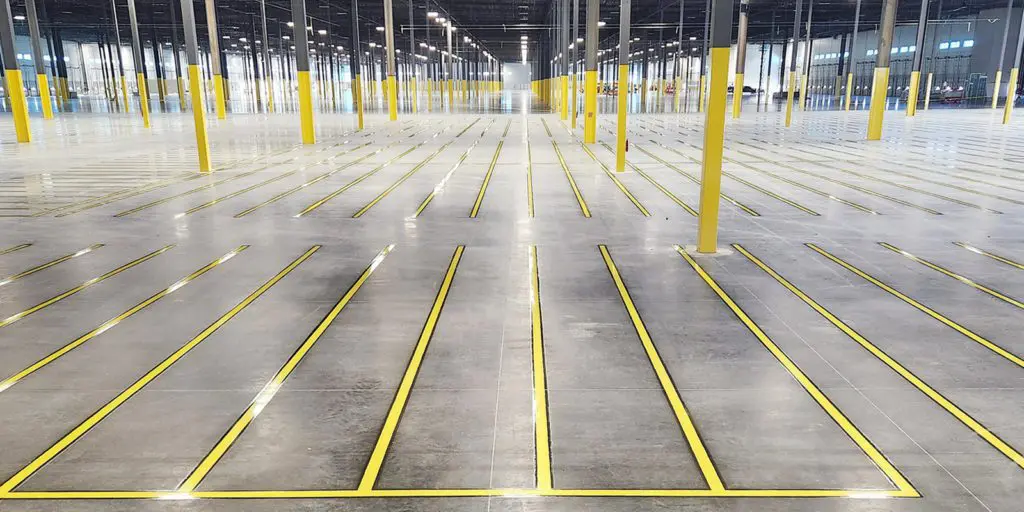
Clear Coat Floor Striping
Clear-coat floor marking is a dual system designed to improve the lifespan of floor marking, in logistics and distribution facilities. It is used in conjunction with our direct applied epoxy and shot blast floor striping solutions.
Find more…
Contact us and discover how we can help.

Call us
Speak to our friendly team. Mon-Fri from 8:30am to 5:30pm.

Email us
Have a question? Not sure where to turn? Our team are always available to help.

Learn more
Industry benchmarks are set on what we do and the quality of our products, find out why.

Download…
Information sheets, location data files, and white papers for you to take away.
